
Poor Indoor Air Quality and Wellbeing: What Recent Classroom Data Suggests
Indoor air quality affects more than comfort. In classrooms, offices, and homes, poor air can influence how people feel, focus, interact, and perform throughout the day.
What Counts as Indoor Air Quality?
Indoor air quality includes the mix of conditions people experience inside a room: temperature, humidity, ventilation, carbon dioxide, oxygen levels, airborne pollutants, light, and odors.
How Poor Air Quality Affects Wellbeing
- Lower attention: Warm, stuffy rooms can make it harder to stay focused.
- More fatigue: Poor ventilation may contribute to tiredness, sleepiness, or reduced motivation.
- Discomfort and irritation: Dry air, odors, or pollutants can cause headaches, eye irritation, or general unease.
- Reduced engagement: When the indoor environment feels uncomfortable, people may participate less and become distracted more easily.
What Recent Classroom Data Suggests
A classroom study using real-time environmental sensors and anonymous behavioral observations found that indoor conditions were connected to student focus and engagement. Temperature showed the strongest relationship with attention: students were more attentive when the room was slightly cooler. Oxygen levels also appeared to affect engagement at certain points in the lesson, suggesting that even small changes in the indoor environment can shape how students participate and concentrate.
Simple Ways to Improve Indoor Air
- Increase fresh air through ventilation when possible.
- Use indoor air monitors to track carbon dioxide, humidity, temperature, and pollutants so problems are easier to spot.
- Add air purifiers with appropriate filters to help reduce airborne particles, especially in rooms with limited ventilation.
- Keep temperature and humidity within a comfortable range.
- Reduce indoor pollutants from cleaning products, furniture, dust, or poor maintenance.
Take Action with Well Building Connection
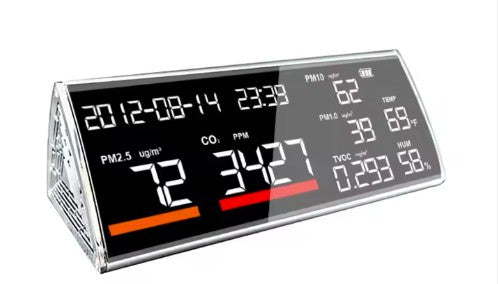
At Well Building Connection, we carry tools to help you take action right away. Our 8-in-1 Smart Air Quality Monitor tracks CO2, PM2.5, humidity, temperature, and more in real time — so you always know what’s in the air you’re breathing. Our HEPA Air Purifier and Bamboo Charcoal Air Purifying Bags offer effective, eco-friendly filtration for any space — from bedrooms to classrooms to offices.
The Takeaway
Cleaner indoor air supports clearer thinking, steadier attention, and better everyday wellbeing. Improving air quality is not just a building issue — it is a health, learning, and productivity issue.
Source: Valdes-Ramirez, D., Zavala, G., et al. Multimodal dataset of biometric, behavioral, and environmental sensor indicators in a classroom setting. DOI: https://doi.org/10.5281/zenodo.19728066 (2026).
Want More Wellness Tips for Your Home?
Join the Well Building Connection community and get indoor air quality insights, product guides, and exclusive offers delivered to your inbox.